

At a university in central Vietnam, 80 first-year English majors completed technology-assisted speaking tasks, including video recordings. In the published case study, many reported less anxiety and more confidence. One student became comfortable speaking English with foreigners at her part-time job.
The study also found a limit. Some students felt better alone with a camera but still struggled with classmates or teachers. Private practice created a safe start. It did not replace interaction.
Personal storytelling works for the same reason. It gives you familiar material to rehearse, then carry into a real conversation.
Remove the idea problem first
When asked to speak about “an important event,” you must choose an event, organise it, find English words, and monitor grammar at the same time. Silence may look like weak English when the first problem is simply: What should I say?
A real memory removes part of that load. You already know the people, place, order, and result. If you tell the story of missing a flight, you can picture the alarm, traffic, departure board, and phone call. Those details prompt the next idea.
Personal does not mean private or dramatic. You can describe fixing a bicycle, cooking with a relative, getting lost on campus, choosing a laptop, or helping a colleague. The story only needs to be yours.

Give vocabulary a job
A word list separates language from purpose. A story gives phrases clear roles.
In the missed-flight story, you might use running late, stuck in traffic, by the time I arrived, and learned the hard way. Each phrase belongs to a moment and feeling. That makes it easier to retrieve later.
Retelling also creates useful variation. Start once from the beginning. Next time, open with the result: “I have never trusted one alarm since the morning I missed my flight.” Compress the story to 30 seconds. Expand it to two minutes. Use it as an example in a discussion about travel, stress, planning, or technology.
A small seven-week study of digital storytelling asked multilingual pre-service teachers to draft, revise, record, and present stories. Assessed fluency, coherence, and cohesion improved. The sample was small, so the result is promising rather than final. Still, the process is practical: choose, draft, speak, receive feedback, and speak again.
Remember the route, not every sentence
A memorised script may sound smooth until someone interrupts. Use five landmarks instead:
- Scene: Where and when?
- Need: What did you want or fear?
- Turning point: What changed?
- Result: What happened next?
- Meaning: Why do you remember it?
For a cooking story, the route could be: family kitchen; making your mother’s favourite dish; adding too much salt; your brother helping you restart; everyone eating the second version; learning to ask for help.
Record one version without stopping. Listen for meaning first. Is the turning point clear? Can a listener follow he, it, and there? Fix only the part that blocks the story. Do not record ten full versions to chase perfection.
Keep two versions of the route. The short version gives the scene, turning point, and result in about 30 seconds. The long version adds one detail and explains why the event matters. This prevents a common problem: spending the whole answer on background and reaching the important moment after time runs out.
Do not force advanced words into the story. A simple phrase you can retrieve and adapt is more useful than an impressive sentence you can only recite once.
Move from rehearsal to interaction
Research on willingness to communicate shows that speaking depends on identity, relationships, and the situation—not only personality. That is why practice should become less predictable over time.
First, tell the story alone. Next, tell it to a friend who can interrupt. Answer an unplanned follow-up. Then take the same material into mock speaking. Do not force the full story into every answer; select the relevant part.
HiBeaver Story Builder supports this path. Start from a real experience. Clarify the route. Improve sentences that do not sound like you. Save useful phrases. Read it aloud, then retell it without looking. The text is support, not a script you must obey forever.
Sources
- Technology-assisted tasks in EFL speaking classes in Vietnam — Asian-Pacific Journal of Second and Foreign Language Education.
- Digital storytelling for academic public speaking — Education and Information Technologies.
- Willingness to Communicate in L2 — Journal for the Psychology of Language Learning.
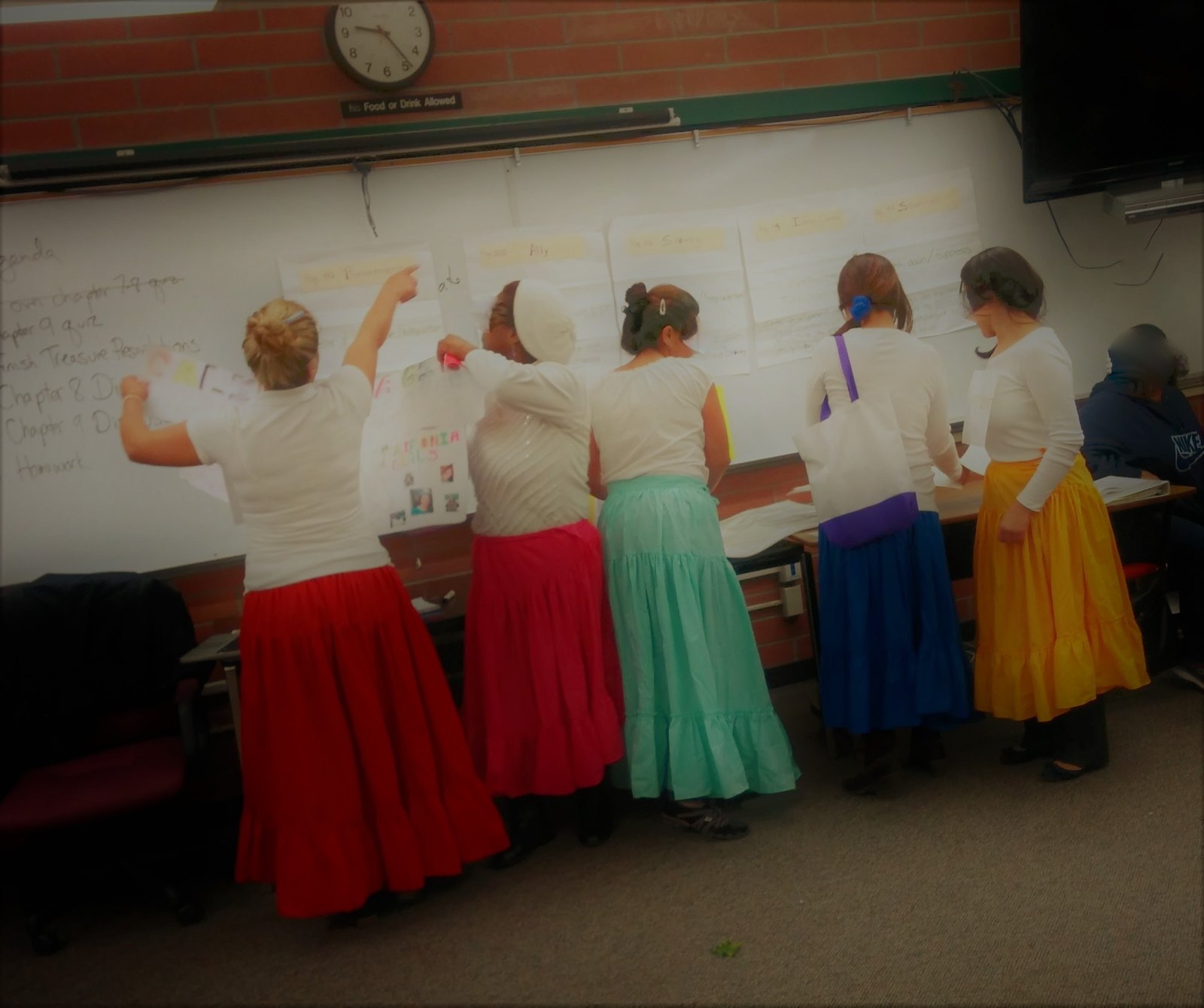
- Students engaged in storytelling — Julianne Zvalo-Martyn, CC BY-SA 4.0, via Wikimedia Commons.